Important Dates
| Paper Submission | May 10, 2026 |
| Notification to Authors | May 21, 2026 |
| Registration Deadline | May 29, 2026 |
| Camera Ready Submission | June 15, 2026 |
Submission Guidelines
Papers must be written in English and formatted according to the Springer LNCS one-column page format. Paper length must be 10-15 pages in LNCS format, including references. The paper should be submitted in Word or PDF format. An extra fee will be charged for each additional page above 10 pages. All submissions should be made through Microsoft Conference Management Toolkit.
For any issues related to the submission process, please, feel free to contact us: info@ccidsa.comRegistration Information
| In-Person (USD) | Online (USD) | |
|---|---|---|
| Regular Author | 500 | 300 |
| Student Author | 400 | 250 |
| Extra Page Charges | 25 | 25 |
| Attendee For co-authors not presenting, or anyone attending without a submitted paper |
300 | 200 |

All technical support, registration handling, and related conference administrative services for CCIDSA 2026 are managed by Multidisciplinary R&D Forum Ltd. (MRD Forum). MRD Forum is a UK-registered organisation providing academic event management, digital conference solutions, and event administration services.
Refund and Cancellation Policy:
Refund and cancellation requests must be submitted through the Author Dashboard within three calendar days of the payment date and no later than the published registration deadline, whichever occurs first. Each request must include the registrant's details, payment information, and a valid reason for cancellation.
Approved refunds will be issued after deducting any applicable bank, payment-gateway, currency-conversion, or administrative charges. No refunds will be provided after the registration deadline, once the paper has been included in the conference program, submitted for publication or proceedings production, or once conference or publication-related services have commenced. Refunds will also not be issued for non-attendance, withdrawal after the applicable deadline, visa refusal, travel disruption, or failure to participate in or present at the conference.
If the conference is cancelled by the organizers, the registration fee will be refunded or transferred to a rescheduled event. The organizers will not be responsible for travel, accommodation, visa, or other personal expenses incurred by participants.
Author Registration
Author registration is reserved for the corresponding author of an accepted paper. Only the corresponding author listed in the submission system can log in to the Author Dashboard to complete payment and upload required documents.
- Registration by at least one author is mandatory to present the paper and include it in the conference proceedings.
- Authors with more than one paper: Regular registrations may receive a waiver for one additional paper only — all further papers must be paid individually. Student registrations receive no waiver and must pay for each paper separately.
- The registration fee applies only to the presenting author and the paper being presented. If any additional co-author wishes to attend the conference, they must register separately as an Attendee without Paper.
Attendee & Participant Registration
Not an author? You are still welcome to attend CCIDSA-2026! Researchers, students, professionals, and anyone interested in the conference topics can register as a participant (attendee) without submitting a paper.
- Participants may attend all sessions, keynote talks, and panel discussions.
- Registration is open to anyone — no paper submission is required.
- Select the Attendee (without paper) category during registration.
Online payment for participant registration is now closed.
You may still register in person at the registration desk on the day of the conference.
Proceeding Publication
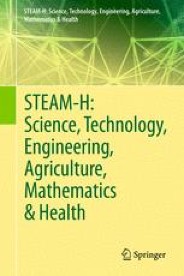
The proceedings of all accepted and presented papers from the conference are planned to be submitted to Springer for publication in the book series STEAM-H: Science, Technology, Engineering, Agriculture, Mathematics & Health.
All papers accepted and presented from the conference will be published by Springer as a proceedings book volume in the STEAM-H book series. Springer will conduct quality checks on the accepted papers and only papers that pass these checks will be published.
Abstracted and indexed in: SCOPUS, zbMATH
ISSN: 2520-193X | E-ISSN: 2520-1948
Camera-ready Instructions
Authors can use either Latex or Word format for camera-ready submission. For Latex submissions, authors must upload original source files in .ZIP format and upload the PDF version of the paper. Papers should be written in English and formatted according to the Springer LNCS one-column page format. Papers must have a length of 10-15 pages in LNCS format. For more detailed guidelines, please visit the official Springer Guidelines website.
Please note that it is mandatory for authors to address all reviewer comments (if any) and submit the camera-ready version of their paper in the prescribed format by the camera-ready deadline. Failure to comply may result in exclusion from the Springer Conference Proceedings.
Authors of accepted papers are required to submit the following three mandatory files:
- Original Source Files of Paper (Latex as a ZIP or Word)
- PDF Version of Paper
- Completely Filled and Signed Copyright Form
For any issues related to the submission process, please feel free to contact us: info@ccidsa.com
How to Upload Camera-Ready Materials via CMT
Follow these steps to complete your submission on Microsoft CMT
- Original source files (LaTeX
.zipor Word.docx) - Final PDF version of the paper
- Completed and signed Copyright Form
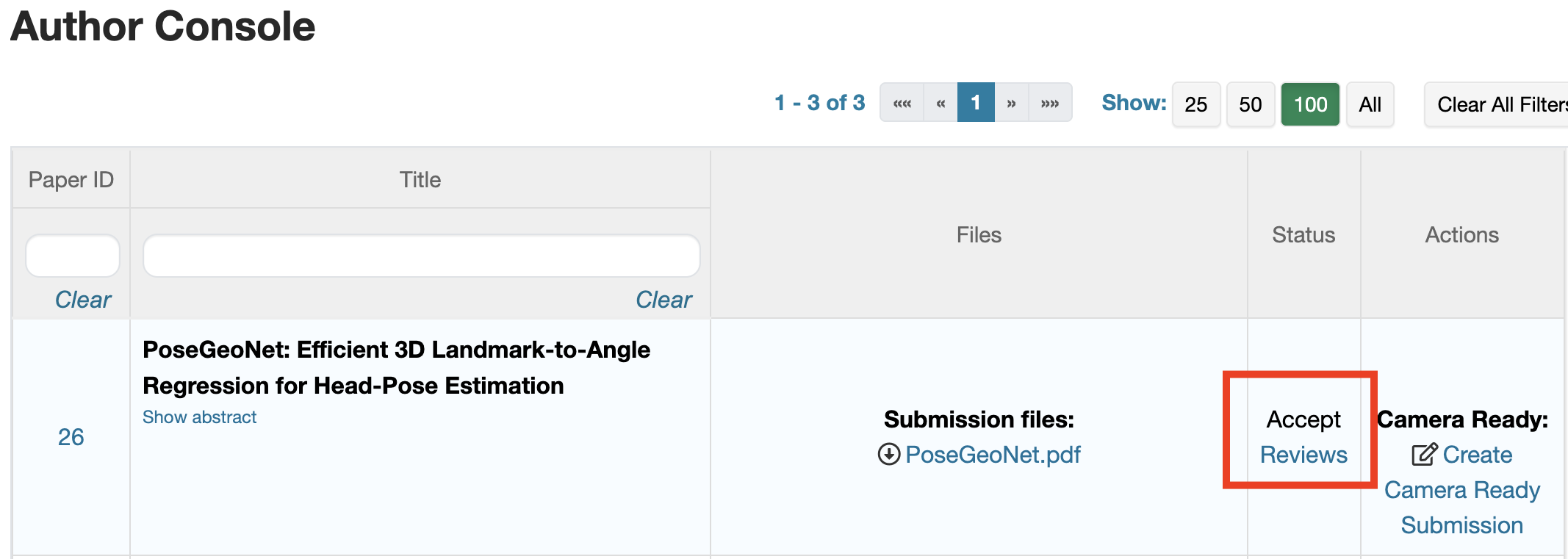
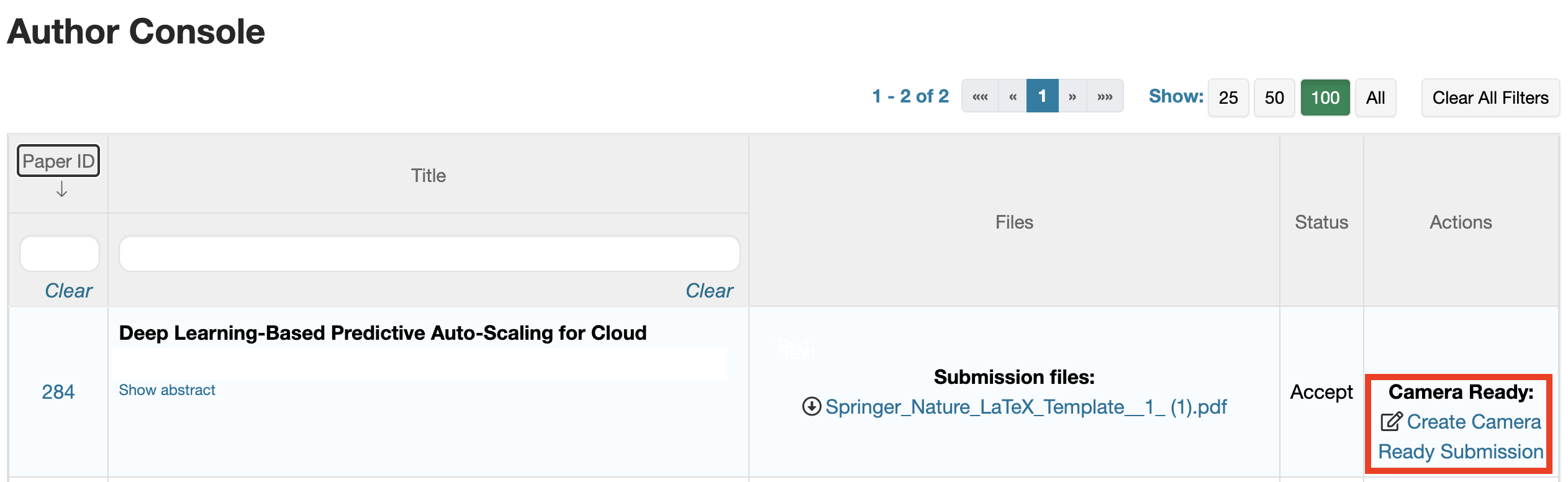
Camera-Ready Submission Checklist for Authors
Please go through every point carefully before uploading your files to CMT.
.tex file,
bibliography file such as .bib or
.bbl, figure files, and supporting files.
For Word submissions, submit the final Word or RTF file.
The PDF must exactly match the final source file.
1. Final source file
2. Final PDF
3. Signed copyright form
Presentation Guidelines
All authors are requested to follow the guidelines below while preparing presentation slides:
- The allocated time for each paper is 15 minutes. The presenter should present for 10-12 minutes, followed by a 1-3 minute question and answer session.
- Authors are encouraged to include the conference logo and paper title in the presentation background.
- Authors participating online must ensure a stable internet connection.
- Slide design should be as simple as possible. Avoid long paragraphs in slides; keep content compact and to the point.
- Audience members are requested to ask questions during the Q and A session at the end of each presentation.
Review Process
- All submitted papers will be reviewed by at least 2 independent reviewers. Additional reviewers will be consulted if required.
- All papers will go through plagiarism checker. Plagiarism report must not exceed 15%
- Paper acceptance will be based on originality, significance, technical soundness, and clarity of presentation.
- Authors must make sure that they submit previously unpublished papers to this conference.